In 30 seconds
A threat actor claims to be sharing roughly 820,000 records allegedly taken from systems associated with 31 South Korean universities. The claim remains unverified, and the available evidence cites no official confirmation from the named institutions.DailyDarkWebx.com · DailyDarkWeb · xOpen original sourceSee in source list
What happened
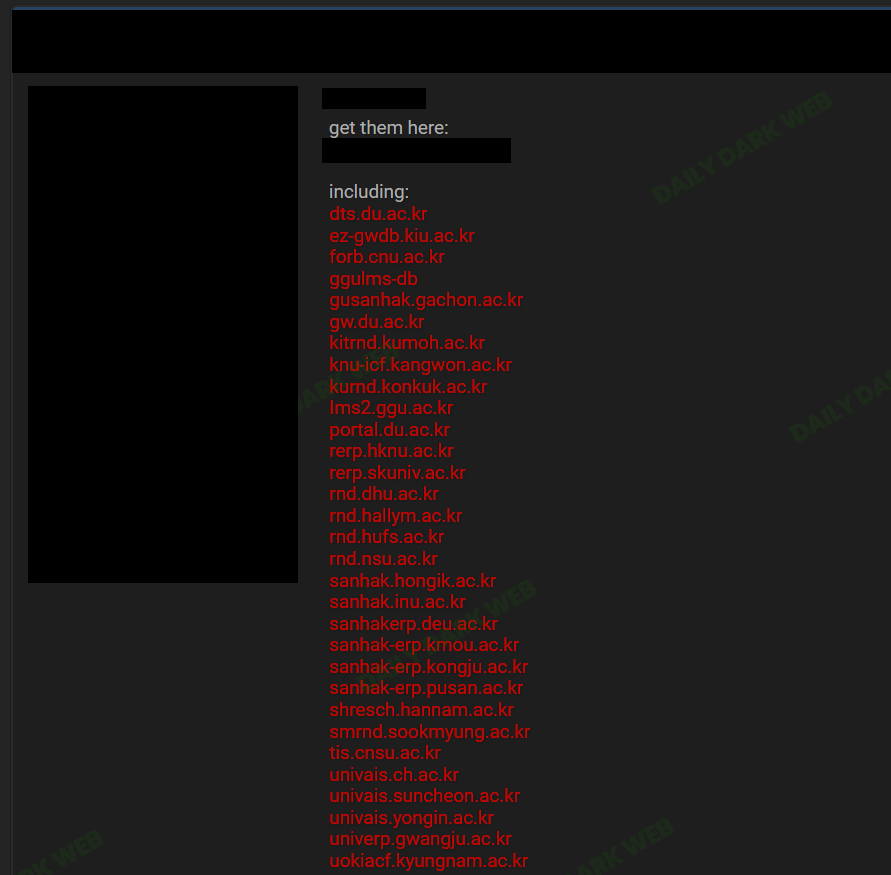
DailyDarkWeb reported that a listing attributes the data to internal portals, enterprise resource planning systems, learning platforms and research-office systems. It names institutions including Konkuk, Hongik, Gachon, Kangwon, Pusan National, Sookmyung, Hallym and Hankuk University of Foreign Studies.DailyDarkWebx.com · DailyDarkWeb · xOpen original sourceSee in source list
Why it matters
If authentic, a collection combining names and contact details with dates of birth and home addresses could help criminals craft convincing phishing messages or attempt identity fraud against students and university personnel.DailyDarkWebx.com · DailyDarkWeb · xOpen original sourceSee in source list
What to do
The named universities should first determine whether the listing matches their systems or records, then establish the affected population before issuing targeted warnings. Students and staff should treat unexpected messages about enrollment, accounts or research grants with extra caution while the claim is investigated.DailyDarkWebx.com · DailyDarkWeb · xOpen original sourceSee in source list
Confirmed and still uncertain
What is observable is a public report describing the actor's claim and reproducing an apparent listing. The supplied evidence does not independently authenticate the records, show how any systems were accessed, establish when the alleged collection occurred or confirm that all 31 institutions were affected.DailyDarkWebx.com · DailyDarkWeb · xOpen original sourceSee in source list
What people are saying
DailyDarkWeb explicitly labels the report an unverified threat-actor claim and says there were no official statements at the time of its post. It also warns that university personal data could be exploited around enrollment and research-grant cycles.DailyDarkWebx.com · DailyDarkWeb · xOpen original sourceSee in source list
Evolution
The evidence currently captures only the initial public allegation. It contains no subsequent institutional response, technical investigation, sample validation or disclosure that would strengthen or disprove the actor's story.DailyDarkWebx.com · DailyDarkWeb · xOpen original sourceSee in source list
Reach
1 independent groups, 1 updates, and 4 engagements.
Technical detail
The listing reportedly references portals, ERP systems used for institutional administration, LMS platforms used for teaching, and research-office systems. The alleged fields include full names, email addresses, birth dates, phone numbers and home addresses, but no samples or forensic artifacts are available here for validation.DailyDarkWebx.com · DailyDarkWeb · xOpen original sourceSee in source list
Sources and evidence
The evidence consists of one DailyDarkWeb post on X, accompanied by an image and a summary of an alleged threat-actor listing. Because there are no official notices, independently examined records or technical findings in the supplied batch, the breach claim and its stated scale should remain attributed rather than treated as confirmed.DailyDarkWebx.com · DailyDarkWeb · xOpen original sourceSee in source list
Sources
- DailyDarkWebx.com · DailyDarkWeb · x