In 30 seconds

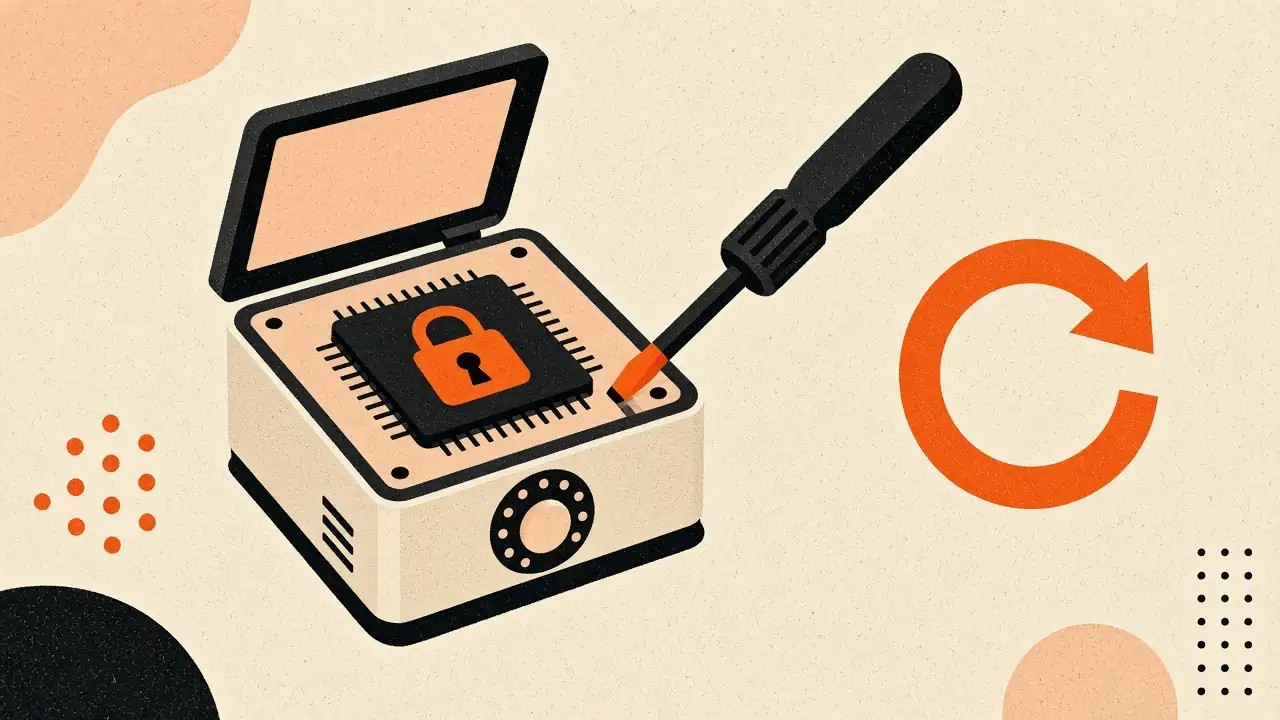
Researchers at Technische Universität Berlin say that simply opening a PC's case can reset the TPM lockout that protects Windows Hello and BitLocker PINs on AMD-based machines and some Intel PCs. The TPM, the small security chip that stores login and encryption secrets, is supposed to lock down after too many wrong PIN guesses. If that lockout can be wiped with physical access, short PINs stop being safe.New Attack Bypasses TPM Lockout to Crack Windows Hello and BitLocker PINs in Days, Not Yearsthehackernews.com · rssOpen original sourceSee in source list
In lab tests, the team recovered a four-digit Windows Hello PIN on an AMD laptop and a six-digit BitLocker PIN on an Intel laptop using a flash-chip attack that cuts brute-force time, meaning systematic guessing of every combination, from years down to days.New Attack Bypasses TPM Lockout to Crack Windows Hello and BitLocker PINs in Days, Not Yearsthehackernews.com · rssOpen original sourceSee in source listTheHackersNewsx.com · TheHackersNews · xOpen original sourceSee in source list
What happened
On November 18, 2026, The Hacker News reported findings from Technische Universität Berlin about TPM lockout protections. The researchers found that on AMD-based PCs and some Intel PCs, the lockout guarding Windows Hello and BitLocker PINs can be reset by someone who opens the computer's case, described as a flash-chip attack.New Attack Bypasses TPM Lockout to Crack Windows Hello and BitLocker PINs in Days, Not Yearsthehackernews.com · rssOpen original sourceSee in source list
To test the impact, the researchers ran lab attacks on two machines. They recovered a four-digit Windows Hello PIN from an AMD laptop and a six-digit BitLocker PIN from an Intel laptop. According to the reporting, the lockout bypass is what shrank the guessing time from what would normally take years to a matter of days.New Attack Bypasses TPM Lockout to Crack Windows Hello and BitLocker PINs in Days, Not Yearsthehackernews.com · rssOpen original sourceSee in source listTheHackersNewsx.com · TheHackersNews · xOpen original sourceSee in source list
Why it matters
The TPM lockout, sometimes called anti-hammering protection, is the mechanism that makes short PINs viable at all. It throttles wrong guesses so that even a four-digit PIN would take years to crack. If opening the case truly resets that counter, the math flips and short PINs fall in days, which points to a real exposure for anyone using minimal PINs on affected hardware.New Attack Bypasses TPM Lockout to Crack Windows Hello and BitLocker PINs in Days, Not Yearsthehackernews.com · rssOpen original sourceSee in source list
The attack as described requires hands on the machine, since it starts with opening the case. That means the immediate risk concentrates on scenarios like a stolen or lost laptop, or a device an adversary can quietly access, rather than a remote attack over the network.New Attack Bypasses TPM Lockout to Crack Windows Hello and BitLocker PINs in Days, Not Yearsthehackernews.com · rssOpen original sourceSee in source list
What to do
The practical takeaway from the finding is that PIN length is the defense that survives this attack. If the lockout can be reset, then the only thing standing between an attacker and your secrets is how many combinations they must try, so long PINs, ideally alphanumeric ones, or a strong password restore the cost that the bypass removes.New Attack Bypasses TPM Lockout to Crack Windows Hello and BitLocker PINs in Days, Not Yearsthehackernews.com · rssOpen original sourceSee in source list
Since the described attack begins with physical access, keeping machines with sensitive data physically secured matters as much as the PIN itself. Nothing in the current evidence suggests a remote variant, so custody of the hardware is the other half of the defense.New Attack Bypasses TPM Lockout to Crack Windows Hello and BitLocker PINs in Days, Not Yearsthehackernews.com · rssOpen original sourceSee in source list
Confirmed and still uncertain
What is on the table so far, all attributed to the Berlin researchers: the lockout reset affects AMD-based PCs and some Intel PCs, the method involves a flash chip and an opened case, and two lab recoveries succeeded on an AMD laptop with a four-digit Hello PIN and an Intel laptop with a six-digit BitLocker PIN.New Attack Bypasses TPM Lockout to Crack Windows Hello and BitLocker PINs in Days, Not Yearsthehackernews.com · rssOpen original sourceSee in source list
Plenty is not yet established. The evidence batch contains no full list of affected models, no vendor advisories or patches, no independent replication, and no demonstration outside lab conditions. The article text itself also cuts off mid-sentence right where it explains how the test PINs were set, so that experimental detail is incomplete here.New Attack Bypasses TPM Lockout to Crack Windows Hello and BitLocker PINs in Days, Not Yearsthehackernews.com · rssOpen original sourceSee in source list
What people are saying
The Hacker News covered the research as a significant bypass of TPM protections, and its own account on X pushed the story hard, labeling it breaking news and stressing that a flash-chip attack cuts brute-force times from years to days on affected AMD and Intel PCs. The underlying claims trace back to the Technische Universität Berlin team rather than to the outlet's own testing.TheHackersNewsx.com · TheHackersNews · xOpen original sourceSee in source listNew Attack Bypasses TPM Lockout to Crack Windows Hello and BitLocker PINs in Days, Not Yearsthehackernews.com · rssOpen original sourceSee in source list
Evolution
The story is at its first ripple. The Hacker News published the article, and about 25 minutes later its X account amplified it with the years-to-days framing. Within the available evidence, that is the entire arc so far: initial report, immediate self-amplification, and nothing yet from vendors or other researchers.New Attack Bypasses TPM Lockout to Crack Windows Hello and BitLocker PINs in Days, Not Yearsthehackernews.com · rssOpen original sourceSee in source listTheHackersNewsx.com · TheHackersNews · xOpen original sourceSee in source list
The framing shift is the real story. Before this, TPM lockout was treated as the reason PIN brute force was impractical on modern Windows machines. The research recharacterizes that protection as resettable with nothing more than physical access, which changes how short Windows Hello and BitLocker PINs should be judged.New Attack Bypasses TPM Lockout to Crack Windows Hello and BitLocker PINs in Days, Not Yearsthehackernews.com · rssOpen original sourceSee in source list
Reach
1 independent groups, 1 updates, and 4 engagements.
Technical detail
The TPM, or trusted platform module, enforces a lockout that throttles repeated wrong PIN attempts. According to the researchers, the attack works by manipulating a flash chip, a small memory component on the board, after opening the PC's case, which resets the lockout counter on AMD-based machines and some Intel machines and lets guessing proceed at full speed.New Attack Bypasses TPM Lockout to Crack Windows Hello and BitLocker PINs in Days, Not Yearsthehackernews.com · rssOpen original sourceSee in source listTheHackersNewsx.com · TheHackersNews · xOpen original sourceSee in source list
The reported test bed was two laptops: an AMD machine protected by a four-digit Windows Hello PIN and an Intel machine protected by a six-digit BitLocker PIN. Both were cracked in lab conditions in days rather than years, which is the concrete evidence behind the years-to-days claim.New Attack Bypasses TPM Lockout to Crack Windows Hello and BitLocker PINs in Days, Not Yearsthehackernews.com · rssOpen original sourceSee in source list
Sources and evidence
This brief rests on one primary source, The Hacker News article reporting the Technische Universität Berlin findings, and one discussion item, the outlet's own post on X. The batch contains no direct link to the researchers' paper, no vendor statement, and no independent confirmation, so every claim about the attack's effectiveness remains attributed to the research team as relayed by a single outlet.New Attack Bypasses TPM Lockout to Crack Windows Hello and BitLocker PINs in Days, Not Yearsthehackernews.com · rssOpen original sourceSee in source listTheHackersNewsx.com · TheHackersNews · xOpen original sourceSee in source list
Sources
- New Attack Bypasses TPM Lockout to Crack Windows Hello and BitLocker PINs in Days, Not Yearsthehackernews.com · rss
- TheHackersNewsx.com · TheHackersNews · x