In 30 seconds
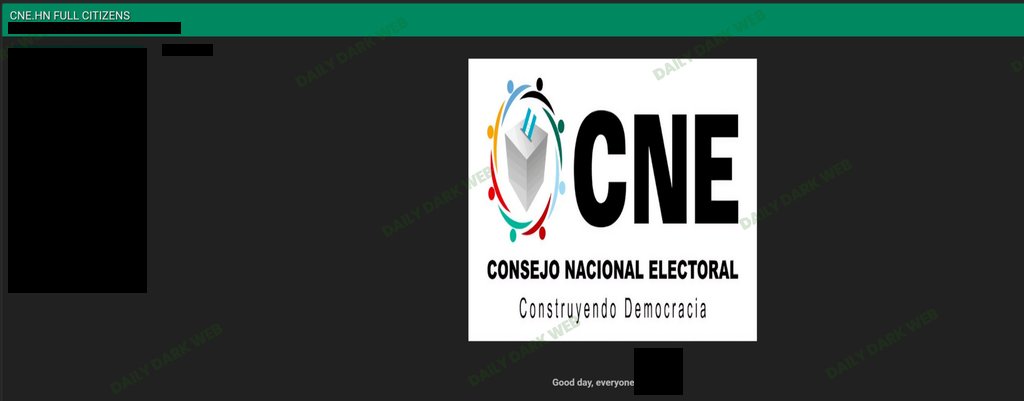
A threat actor, security jargon for a person or group with malicious intent, claims to have accessed and downloaded the full electoral roll of Honduras. That is the master list of registered voters kept by the National Electoral Council, known locally as the CNE, and the claimed haul covers about 7 million citizens.DailyDarkWebx.com · DailyDarkWeb · xOpen original sourceSee in source list
The claim surfaced on November 17 in a post by DailyDarkWeb, an account that tracks dark web activity, and it arrives pre-flagged: the account itself calls the claim unverified and notes that the CNE has not commented. Treat it as a lead, not a confirmed breach.DailyDarkWebx.com · DailyDarkWeb · xOpen original sourceSee in source list
What happened
On November 17, 2026, the X account DailyDarkWeb published a post describing an alleged breach at Honduras's Consejo Nacional Electoral, the National Electoral Council that runs elections and maintains the voter register.DailyDarkWebx.com · DailyDarkWeb · xOpen original sourceSee in source list
In the telling of the post, a threat actor says they broke in and pulled down the complete roll. The fields supposedly inside: national ID numbers, full names, gender, dates of birth, and home location codes at the department, municipality and village level.DailyDarkWebx.com · DailyDarkWeb · xOpen original sourceSee in source list
The public record ends there. The post carries an analyst note stating that the claim is unverified and that the CNE has not commented, and nothing else in view confirms any of it.DailyDarkWebx.com · DailyDarkWeb · xOpen original sourceSee in source list
Why it matters
A voter roll is dangerous precisely because it bundles identity in one place: a legal name, a government ID number and a date of birth. Anyone holding that trio can attempt account takeovers, loan fraud, or a phishing message that sounds convincing because it quotes your real details back at you.DailyDarkWebx.com · DailyDarkWeb · xOpen original sourceSee in source list
The analyst note makes the same point in fewer words, calling a national voter roll with ID numbers and birth dates a strong base for identity fraud. For most people the near-term threat is not spies, it is scammers: calls and messages that weaponize familiarity.DailyDarkWebx.com · DailyDarkWeb · xOpen original sourceSee in source list
DailyDarkWeb also asserts a pattern, saying the alleged leak adds to a series of recent claims against Honduran government bodies. That context is itself unverified, but if accurate it would suggest state systems are drawing repeated attention from attackers.DailyDarkWebx.com · DailyDarkWeb · xOpen original sourceSee in source list
What to do
Act as if the data could be real. Be skeptical of any unexpected call or message that already knows your ID number, full name or birth date, whether it claims to be the CNE, your bank or your phone company.DailyDarkWebx.com · DailyDarkWeb · xOpen original sourceSee in source list
Never hand over verification codes, passwords or money because a stranger recites your personal details correctly. Knowing your data is not proof of legitimacy, it is exactly what a leaked roll would hand a scammer.DailyDarkWebx.com · DailyDarkWeb · xOpen original sourceSee in source list
Practical extras: turn on alerts for bank and telecom accounts where offered, and report contacts that invoke your voter record to the relevant authorities. No official guidance appears in this batch, so these are common-sense steps inferred from the kind of data claimed.DailyDarkWebx.com · DailyDarkWeb · xOpen original sourceSee in source list
Confirmed and still uncertain
What is on the record: one public post, the list of fields it claims were leaked, an explicit statement that the claim is unverified, and a note that the CNE has not commented. That is the entire evidence base.DailyDarkWebx.com · DailyDarkWeb · xOpen original sourceSee in source list
What is unknown dwarfs it. No data sample has been shown, no method of access is described, no sale listing or price is mentioned, and no independent researcher has corroborated the actor's access or the file's authenticity. The claim could be genuine, recycled from an older incident, or fabricated for attention, and nothing currently distinguishes the three.DailyDarkWebx.com · DailyDarkWeb · xOpen original sourceSee in source list
What people are saying
The only public voice so far is DailyDarkWeb, the monitoring account that broke the claim. Even it keeps distance from its own story, writing plainly that the claim is unverified.DailyDarkWebx.com · DailyDarkWeb · xOpen original sourceSee in source list
The account adds one piece of context: the alleged leak, it says, belongs to a series of recent claims against Honduran government institutions.DailyDarkWebx.com · DailyDarkWeb · xOpen original sourceSee in source list
The Honduran electoral authority has said nothing in public, according to the post, so there is no official word confirming or denying the alleged breach, and no victim statement appears in the evidence.DailyDarkWebx.com · DailyDarkWeb · xOpen original sourceSee in source list
Evolution
The story sits at its first checkpoint. It opened on November 17 with the DailyDarkWeb post and, within the available evidence, nothing has followed: no correction, no sample release, no official response.DailyDarkWebx.com · DailyDarkWeb · xOpen original sourceSee in source list
The next beats in cases like this are usually verification attempts by researchers, a statement from the affected institution, and, on the criminal side, quick exploitation if the data turns out to be real. None of that is on the record yet.DailyDarkWebx.com · DailyDarkWeb · xOpen original sourceSee in source list
Reach
1 independent groups, 1 updates, and 0 engagements.
Technical detail
The post itemizes the supposed file contents: national ID numbers, full names, gender, dates of birth, and location codes at three administrative levels, department, municipality and village. Those codes work like a postal hierarchy, narrowing a person's home from region to locality.DailyDarkWebx.com · DailyDarkWeb · xOpen original sourceSee in source list
Two absences stand out. The claim does not mention phone numbers, email addresses or biometric data, and it offers no samples, record counts or cryptographic fingerprints that would let outsiders verify the file. That is typical of untested claims and a key reason researchers hold judgment.DailyDarkWebx.com · DailyDarkWeb · xOpen original sourceSee in source list
Sources and evidence
This report rests on one source: an X post by DailyDarkWeb, a dark web monitoring account, published on November 17, 2026, with a screenshot credited to the account and an embedded analyst note flagging the claim as unverified.DailyDarkWebx.com · DailyDarkWeb · xOpen original sourceSee in source list
Weigh it accordingly. One anonymous claim, no corroboration, no official comment and no data samples means every breach detail above remains alleged. The picture changes only with a second source, a verified sample, or a statement from the CNE.DailyDarkWebx.com · DailyDarkWeb · xOpen original sourceSee in source list
Sources
- DailyDarkWebx.com · DailyDarkWeb · x